MEDIA AND MATERIALS
Media and Materials in Teaching Media
1. Manipulates
a) Real Objects
Such as coins, tools, artifacts, plants, animals-are some of the most accessible,
intriguing, and involving materials in educational use. They are known as
manipulates because students may handle and inspect them.


examples of real objects
Real objects may be used as is, or you may modify them to enhance instruction. Examples of modification include the following :
examples of real objects
Real objects may be used as is, or you may modify them to enhance instruction. Examples of modification include the following :
- Cutaways : devices such as machines with one side cut away to allow close
observation of the inner workings.
- Specimens : actual plants, animals, or parts there of preserved for convenient
 |
| example of cutaways |
inspection.
- Exhibits : collections of artifacts, often of a scientific or historical nature, brought
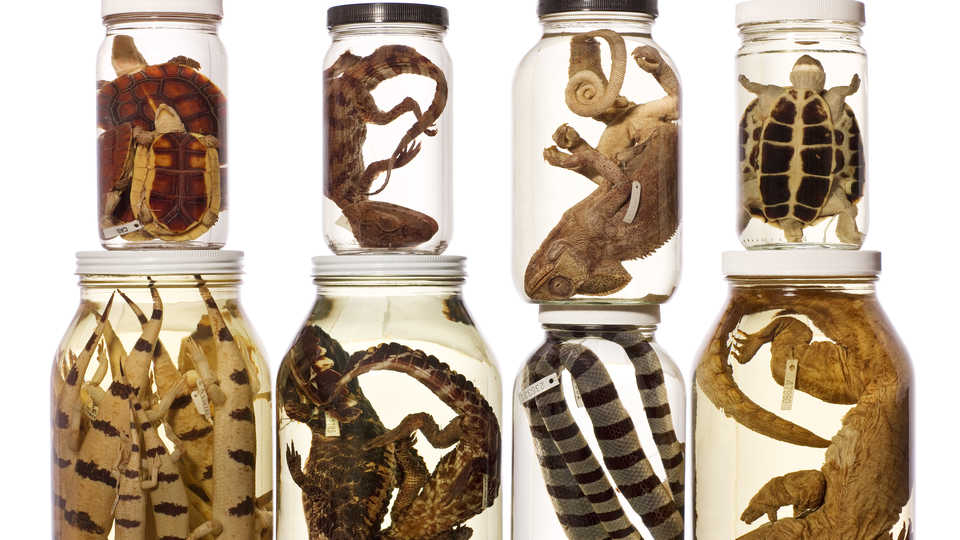 |
| example of specimens |
together with printed information to illustrate a point.
b) Models
 |
| example of exhibit |
b) Models
Models are three-dimensional representations of real objects. A model may be
larger, smaller, or the same size as the object it represents. It may be complete
in detail or simplified for instructional purposes. Indeed, models can provide
learning experience that the real thing can't provide.
- Models of almost everything
- A variety of model kits is also available for you or your students to assemble.
- Assembly activities help sharpen both cognitive and psychomotor skills
- Models and real objects are the recommended media when realism is essential for
learning. They provide concepts that involve three-dimensions; taks that require
identification by size, shape, or color, and hands-on or laboratory practice.
c) Computer Programs and Manipulates
c) Computer Programs and Manipulates
This seems to be the best of both words, efficient use of a single computer in a
classroom and authentic learning experiences for students.
2. Field Trips
The field trip, an excursion outside the classroom to study real processes, people, and objects, often grows out the students' need for firsthand experiences. It makes it possible for students to encounter phenomena that can't be brought into the classroom for observation and study.
Examples of field trips include a trip of view minutes into the schoolyard to observe a tree, a trek across the street to see contruction work, or a longer trip of several days to tour historical locations. Popular field trips sites include zoos, museums, publis buildings, and parks.
Virtual field trips are an extention of actual field trips. Often the expense or the time to travel to a particular interesting location is not possible. But, with the World Wide Web, with a few simple clicks of a mouse, it certainly makes it possible to learn about a location with some authenticity to the experience.
 |
| example of field trips |
3. Printed Materials
Printed materials include textbooks, fiction and non-fiction books, booklets, pamphlets, study guides, manuals, and worksheets, as well as word processed documents prepared by students and also teachers.
a) Advantages
- Avability⇒Printed materials are readily available on a variety of topics and in many
different formats.
- Flexibility⇒They are adaptable to many purposes and may be used in any lighted
environment.
- Portability⇒They are easily carried from place to place and don't require any
equipment or electricity.
- User Friendly⇒Properly designed printed materials are easy to use, not requiring
special effort to "navigate" through.
- Economical⇒Printed materials are relatively inexpensive to produce or purchase
and can be reused.
b) Limitations
- Reading level⇒The major limitation of printed materials is that they are written
at a certain reading level.
- Prior Knowledge⇒Even though textbooks are generally written to be more
considerate of the reader, with clear language and simple sentence structures,
readers who lack some prerequisite knowledge may stuggle to comprehend the
text.
- Memorization⇒Some teachers require students to memorize many facts and
definitions.
- Vocabulary⇒Some texts introduce a large number of vocabulary terms and
concepts in a short amount of space.
- One-way Presentation⇒Since most printed materials aren't interactive, they tend
to be used in a passive way, often without comprehension.
- Curriculum Determination⇒Sometimes textbooks dictate the curriculum rather
than being used to support the curriculum.
c) Integration
- The most common application of printed materials is presenting content
information.
- Students may also use printed materials to augment either the information you
present or other forms of media.
- Printed materials are used in all subject areas and with students of all ages once
they learn to read.
d) Utilization
When we using printed materials for instruction, one of the main roles of the teacher is to get learners actively involved with the material. One techniques is to have students use the "SQ3R" method : Survey, Question, Read, Recite, and Review.
- Survey requires students to skim through the printed material and to read the
overview and/or review.
- In the question step they write a list of questions to answer while reading.
- In the read stage students are encouraged to look for the organization of the
material, put brackets around the main ideas, underline supporting details, and
answer the questions written in the previous step.
- Recite requires them to test themselves while reading and to put the content into
their own words.
- Review suggests that the students look over the material immediately after reading
it, the next day, a week later, and so on.
4. Free and Inexpensive Materials
The types of free and inexpensive materials are almost endless. The more commonly available items include posters, games, pamplets, brochures, reports, charts, maps, books, audiotapes, videotapes, multimedia kits, and real objects.
a) Advantages
- Up to date⇒ Free and inexpensive materials can provide up-to-date information that
is not contained in textbooks or other commercially available media.
- In-depth treatment⇒ Such materials often provide in-depth treatment of a topic.
- Variety of uses⇒ These materials lend themselves to your own classroom
presentation. Individual students who want to explore a subject of interest can use
the audiovisual materials for self-study or for presentation to the class. Posters,
charts, and maps can be combined to create topical displays.
- Student manipulation⇒ Materials that are expendable have the extra advantage of
allowing learners to get activity involved with them.
b) Limitations
- Bias or advertising⇒ Many free and inexpensive materials are described as sponso-
red materials because their production and distribution are sponsored by particular
organizations.
- Special interests⇒ What may be even more trouble some is sponsored material that
doesn't contain outright advertising but promotes some special interest in a less
obvious way.
- Limited quantities⇒ With the increasing expense of producing both printed and
mediated materials, your supplier may have to impose limits on the quantities of
items available at one time.
c) Source
There are local, state, national, and international sources of free and inexpensive materials, and may of these are now available as websites. Nationally, one of the most prolific sources of free and inexpensive materials is the federal goverment.
d) Obtaining Materials
- When you have determined what you can use and where you can obtain it, write to
the supplier, some agencies will not supply free and inexpensive materials unless
you write on school or company letterhead.
- Many suppliers attempt to improve free and inexpensive materials on the basis of
user comments.
e) Appraising Materials
- Use the appropriate "Appraisal Checklist" for the type of media ( printed material,
videotape) you are appraising. All the "Appraisal Checklist" froms in this book have
the rating criterion "Free From Objectionable bias or advertising". Use it judiciously
when reviewing free and inexpensive materials.
5. Display Surfaces
- If you are going to use visuals such as photographs, drawings, charts, graphs, or
posters, you need a way to display them.
- How you display your visuals will depend on a number of factors, including :
- The nature of your audience
- The nature of your visuals
- The instructional setting
- The availability of the various display surfaces
- The kinds of display surfaces :
➤ Chalkboards
The chalkboards is most commonly used to support verbal communication, but
you can use it as a surface on which to draw visuals to help illustrate instructional
units. You may draw graphics, such as sketches and diagrams or charts and graphs,
on the chalkboard for display to the class.
➤ Multipurpose Boards
As the name implies, you can use them for more than one purpose. The write
surface is also suitable for projection of video, slides, and overhead transparencies.
➤ Copy Boards
A high-tech variation of the multipurpose boards is the copy boards, or electro
nic whiteboards. This device makes reduced size paper copies what is written on
the board. It looks like a smaller multipurpose board but may contain multiple
screens or frames that can be scrolled forward and backward.
You can prepare content beforehead on any or all of the screens. The copy
board is especially valuable for brainstorming sessions and for summarizing group
discussions. Because of the high cost of current models, the copy board isn't
commonly found in school settings.
➤ Pegboards
It is particulary useful for displaying heavy objects, three-dimensional materials,
and visuals.
➤ Buletin Boards
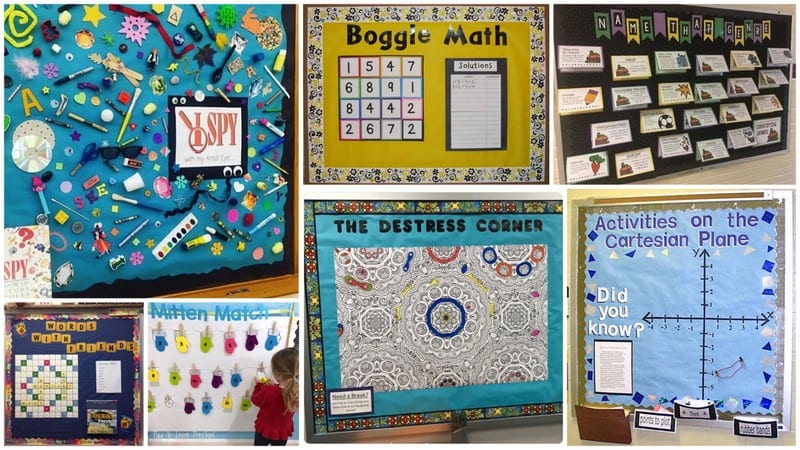
The term bulletin board implies a surface on which bulletins- brief news announ
cements of urgent interest are posted for public notice. In practice, bulletin board
displays tend to serve three board purposes : Decorative, Motivational, or
Instructional.
- The Decorative bulletin boards ⇒ It's function is to lend visual stimulation to the
environment.
- The motivational bulletin boards ⇒ It's posters pride in achievement, reinforcing
students' efforts to do a good job.
- The Instructional bulletin Boards ⇒ Is complementing the educational or training
objectives of the formal curriculum.
➤ Cloth Boards
Cloth boards are constructed of cloth stretched over a study baking material such
as polywood, masonite, or heavy cardboard. One great advantage of the hook-and-
loop board is that it can support large and heavy visuals, even books and other
three-dimensional objects. Teachers of reading and other creative activities often
use the cloth board to illustrate stories, poems, and other reading materials. For
example, they may pace on the board visuals depicting characters and scenes an a
story and more them around as the story unfolds.
➤ Magnetic Boards
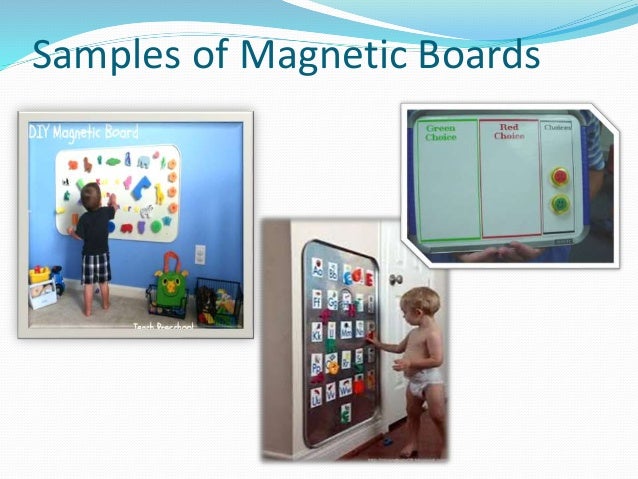
The major advantage of magnetic boards is that maneuvering visuals is easier and
quicker than with cloth boards. For example, physical education instructor often use
them to demonstrate rapid changes in player positions. Magnetic boards also have
greater adhesive quality. Visual displayed on a magnetic board aren't likely to slip
or fall.
➤ Flip Charts
A flip chart is pad of large paper fastened together at the top and mounted to an
easel. The individual sheets each hold a limited verbal/visual message and usually
are arranged for sequential presentation to a small group.
The flip chart is an extremely versatile, convenient, and inexpensive media format
it requires no electrical power, has no moving parts to wear out, can be used in a
range of lighting conditions, is portable, and requires only a marking pen as peri-
pheral equipment. Moreover, it's the most user-friendly tool.
➤ Exhibits
Exhibits are collections of various objects and visuals designed to form an integra-
ted whole for instructional purposes. The school media center is a convenient loca-
tion for exhibits.
There are two types of exhibits :
- Displays ⇒ A display is a collection of materials (e.g., labels and descriptions).
- Dioramas ⇒ Dioramas are static displays consisting of a three-dimentional fore-
ground and a flat background to create a realistic scene. The foreground is usually
a landscape of some sort with models of people, animals, vehicle, equipment, or
buildings. The naturalistic background may be a photograph, drawing, or painting.
Source : Heinich, Molenda, Russell, Smaldino et.All, 2002. Instructional Media and Technologies For Learning Volume 7. California: The University of California
5. Display Surfaces
- If you are going to use visuals such as photographs, drawings, charts, graphs, or
posters, you need a way to display them.
- How you display your visuals will depend on a number of factors, including :
- The nature of your audience
- The nature of your visuals
- The instructional setting
- The availability of the various display surfaces
- The kinds of display surfaces :
➤ Chalkboards
The chalkboards is most commonly used to support verbal communication, but
you can use it as a surface on which to draw visuals to help illustrate instructional
units. You may draw graphics, such as sketches and diagrams or charts and graphs,
on the chalkboard for display to the class.
 |
| example of chalkboard |
➤ Multipurpose Boards
As the name implies, you can use them for more than one purpose. The write
surface is also suitable for projection of video, slides, and overhead transparencies.
 |
| example of multipurpose board |
➤ Copy Boards
A high-tech variation of the multipurpose boards is the copy boards, or electro
nic whiteboards. This device makes reduced size paper copies what is written on
the board. It looks like a smaller multipurpose board but may contain multiple
screens or frames that can be scrolled forward and backward.
You can prepare content beforehead on any or all of the screens. The copy
board is especially valuable for brainstorming sessions and for summarizing group
discussions. Because of the high cost of current models, the copy board isn't
commonly found in school settings.
 |
| example of copy boards |
➤ Pegboards
It is particulary useful for displaying heavy objects, three-dimensional materials,
and visuals.
 |
| example of pegboard |
➤ Buletin Boards
The term bulletin board implies a surface on which bulletins- brief news announ
cements of urgent interest are posted for public notice. In practice, bulletin board
displays tend to serve three board purposes : Decorative, Motivational, or
Instructional.
- The Decorative bulletin boards ⇒ It's function is to lend visual stimulation to the
environment.
- The motivational bulletin boards ⇒ It's posters pride in achievement, reinforcing
students' efforts to do a good job.
- The Instructional bulletin Boards ⇒ Is complementing the educational or training
objectives of the formal curriculum.
 |
| example of bulletin board |
➤ Cloth Boards
Cloth boards are constructed of cloth stretched over a study baking material such
as polywood, masonite, or heavy cardboard. One great advantage of the hook-and-
loop board is that it can support large and heavy visuals, even books and other
three-dimensional objects. Teachers of reading and other creative activities often
use the cloth board to illustrate stories, poems, and other reading materials. For
example, they may pace on the board visuals depicting characters and scenes an a
story and more them around as the story unfolds.
 |
| example of cloth board game |
➤ Magnetic Boards
The major advantage of magnetic boards is that maneuvering visuals is easier and
quicker than with cloth boards. For example, physical education instructor often use
them to demonstrate rapid changes in player positions. Magnetic boards also have
greater adhesive quality. Visual displayed on a magnetic board aren't likely to slip
or fall.
➤ Flip Charts
A flip chart is pad of large paper fastened together at the top and mounted to an
easel. The individual sheets each hold a limited verbal/visual message and usually
are arranged for sequential presentation to a small group.
The flip chart is an extremely versatile, convenient, and inexpensive media format
it requires no electrical power, has no moving parts to wear out, can be used in a
range of lighting conditions, is portable, and requires only a marking pen as peri-
pheral equipment. Moreover, it's the most user-friendly tool.
 |
| example of flip chart |
➤ Exhibits
Exhibits are collections of various objects and visuals designed to form an integra-
ted whole for instructional purposes. The school media center is a convenient loca-
tion for exhibits.
There are two types of exhibits :
- Displays ⇒ A display is a collection of materials (e.g., labels and descriptions).
 |
| example of display |
- Dioramas ⇒ Dioramas are static displays consisting of a three-dimentional fore-
ground and a flat background to create a realistic scene. The foreground is usually
a landscape of some sort with models of people, animals, vehicle, equipment, or
buildings. The naturalistic background may be a photograph, drawing, or painting.
 |
| example of dioramas |
Source : Heinich, Molenda, Russell, Smaldino et.All, 2002. Instructional Media and Technologies For Learning Volume 7. California: The University of California
Komentar
Posting Komentar